Taximeter - Meter App
- 4.7
- Rating
- 1.00M
- Installs
- Free
- Price

 Analysis by App-foxy
Anyone who has ever had to calculate a fare by hand knows how quickly a simple trip becomes an awkward little accounting task. You start with the distance, add the time, remember the local rate, and then try to explain the total clearly to the passenger. Taximeter - Meter App is built to remove that recurring interruption by turning an iPhone or Android phone into a working taximeter. In my experience, its main value is not that it makes driving more interesting; it is that it keeps the fare calculation in one place while I concentrate on the road and the customer.
This is a free business app from Meter App Inc., aimed mainly at taxi drivers, private-hire drivers, small transport operators, and anyone who needs a fare meter without carrying a separate device. It has reached over a million installs and holds a 4.7 average from around nineteen thousand ratings, which suggests that the basic idea is useful to a broad group of drivers. I would still judge it by a more practical question: does it save enough time and reduce enough uncertainty to deserve a place on your phone?
Why a phone taximeter can be more useful than manual fare calculations
The recurring problem is easy to recognize. A driver may know the general fare structure but still need to switch between a calculator, a notes app, a printed rate card, and a navigation screen. That is manageable for one trip, yet it becomes tiring when several rides follow one another. Small mistakes are also uncomfortable. A passenger may question a total, or the driver may lose time reconstructing how the amount was reached.
You May Also Like

 Blood Strike: 2.5 Anniversary
Blood Strike’s Loadouts Turn Every Drop Into a Tactical Gamble
A close look at Blood Strike’s custom loadouts: how fast access to signature weapons reshapes its battle royale rhythm, rewards preparation, and narrows the gap between fights.

 Pandora - Music & Podcasts
Pandora’s Music Is Easy to Start, but Harder to Recover
Pandora’s strength is its low-effort path from a seed to a station. Its weak spot is how much confidence it asks you to place in connection, setup, and quiet recovery.

 8 Ball Pool
 Is Built on Rivalries, Rematches, and Routine
A close look at the rivalries, rematches, shared routines, and unanswered safety questions that turn a quick pool match into a persistent mobile community.

 Samsung Music
’s Quiet Strength Is Playing What You Already Own
Its reach comes less from spectacle than from dependable access to a personal library. That simplicity is both the app’s strongest retention engine and its ceiling.

 AccuWeather: Weather Radar
AccuWeather Review: A Quick, Clear Forecast for Everyday Decisions
For everyday plans, the best forecast is the one you can understand quickly. AccuWeather makes rain timing, radar, and local conditions easy to act on, with a few trade-offs.

 Hill Climb Racing
Why Hill Climb Racing Still Turns Crashes Into One More Run
A tiny car, a bumpy hill and one more upgrade: Hill Climb Racing keeps resurfacing because its simple chaos makes every near-miss feel personal.
More From Our News Desk



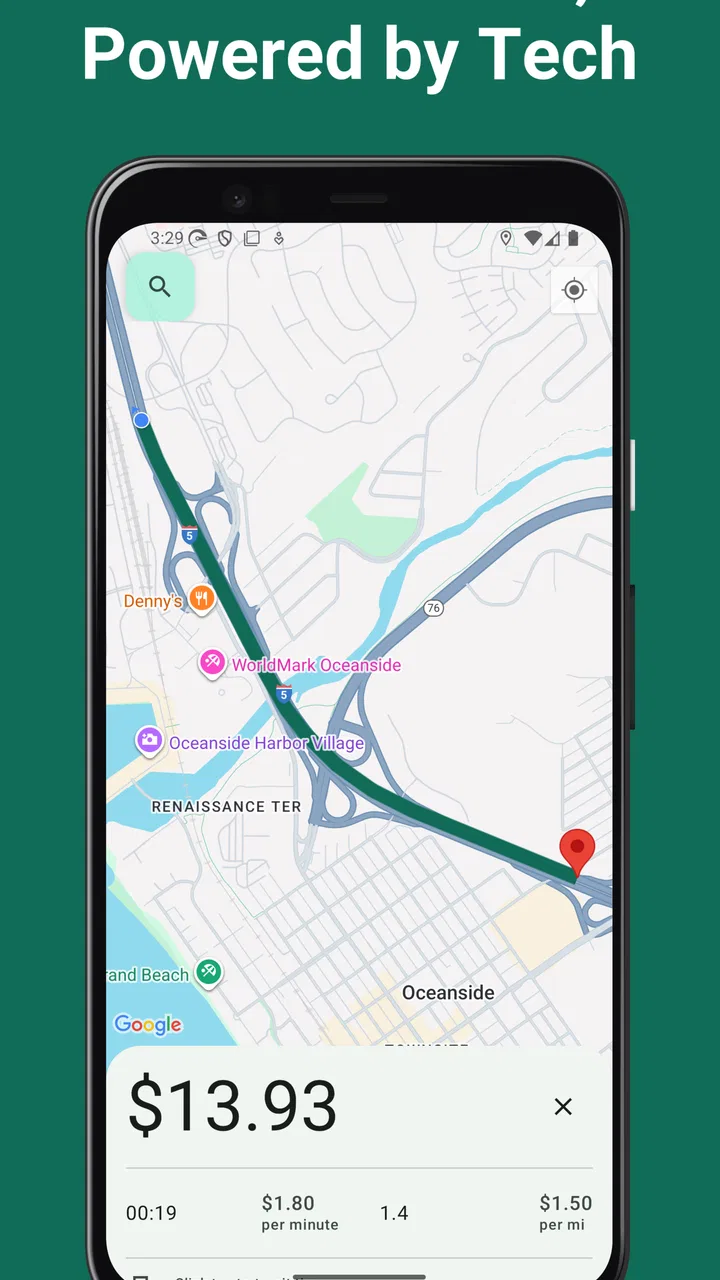
A dedicated taximeter app gives the fare a visible running context. Rather than calculating after the journey, I can let the phone handle the changing amount while the trip is in progress. That is the strongest reason to consider this app. It turns a repeated mental chore into a routine action: prepare the meter, start the ride, monitor the result, and stop it when the journey ends.
That convenience matters most for independent drivers who do not already have a built-in meter. It can also be useful as a backup when a physical meter is unavailable or when a driver wants a separate device for occasional work. I would not treat a phone app as an automatic replacement for every regulated taxi setup, though. Local transport rules, approved equipment, and required receipts can vary, so the app is best viewed as a practical calculation tool rather than proof that every legal obligation has been covered.
The app is free to install and is rated for Everyone, making it approachable for a wide range of users. Optional in-app purchases range from under a dollar to around a hundred dollars per item, so I would check the available purchase choices carefully before committing to anything beyond the basic experience. The important point is that you can begin by testing the core workflow rather than buying equipment or changing your entire driving routine immediately.
The first setup should be treated as a fare-checking exercise
My advice is not to open the app for the first time with a passenger already waiting. Set it up while parked and use a short familiar route as a test. The goal is to understand where the fare begins, how the meter behaves during movement and waiting, and how the final amount is displayed. Even when an app is straightforward, a calm trial exposes confusing controls before they matter.
Before relying on the result, compare the app’s calculation with the rate structure you actually use. A taximeter is only as useful as the values behind it. If your city, company, or service uses a starting charge, distance charge, waiting charge, night rate, booking fee, or other adjustment, make sure the configuration matches your working arrangement. I would keep a written reference nearby during the first few rides rather than assuming that a familiar-looking total is automatically correct.
There is a useful distinction between configuring the app and proving that the configuration is right. The first is a technical task; the second is a business task. Run the same route with the app and compare the result against your approved fare method. Repeat it once under moving conditions and once with a short stop. This catches the kind of mistake that stays hidden when someone only checks the opening screen.
Phone placement deserves attention too. The display should be readable without forcing the driver to look away from the road for too long. I prefer treating the meter as something to glance at briefly, not something to operate continuously. Start the ride before moving, avoid changing settings while driving, and finish the transaction only when it is safe. The app can reduce mental effort, but it cannot make distracted phone use safe.
Another practical tip is to decide in advance who controls the phone. If a passenger wants to see the fare, the driver should still remain responsible for the meter and the vehicle. Showing a running total can make the calculation feel more transparent, but passing the phone back and forth during a ride creates its own distraction. A fixed position and a consistent routine are more valuable than constantly adjusting the screen.
What I would test before using it with paying passengers
I would check four moments: starting a trip, pausing for traffic or a passenger stop, ending the trip, and resetting for the next customer. Those transitions are where a small control mistake can carry into the following ride. A meter that works well during motion can still be frustrating if the driver has to search for the reset action or is unsure whether the previous fare has truly ended.
I would also test the app under the conditions in which I expect to use it. A short daytime trip is not enough if most of the work happens during long evening shifts, heavy traffic, or frequent stops. The point is not to invent a performance claim; it is to learn whether the workflow remains comfortable on your own phone and in your own vehicle. Screen size, mounting position, battery condition, and road conditions all affect how easy a phone-based meter feels.
Finally, I would establish a simple backup habit. Keep the applicable rate information available in a form you can consult safely when parked, and know how you will handle a trip if the phone becomes unavailable. That is not a criticism unique to this app. It is the trade-off of replacing a dedicated meter with a general-purpose device that also handles calls, navigation, messages, and other tasks.
How it fits into ordinary driving days
Imagine a realistic afternoon for an independent driver. A customer enters for a cross-town trip, and the route includes slow traffic near a busy shopping area. With manual calculation, the driver might remember the distance, estimate the waiting portion, and settle the amount later. With a taximeter workflow, the fare can remain visible as the trip develops. The driver does not need to perform arithmetic while answering a question, watching traffic, or preparing to turn.
That is where the app’s time-saving benefit becomes tangible. It does not necessarily shorten the journey, but it shortens the administrative tail around the journey. At the destination, the driver has a figure ready instead of reconstructing one from memory. For someone completing many similar rides, removing that repeated pause can make the whole shift feel less fragmented.
Short trips are another good use case. A brief ride can be disproportionately annoying to calculate because the driver still has to account for the starting amount and any applicable time or distance component. A running meter gives the driver a consistent process even when the fare is small. Consistency is especially helpful for occasional drivers who do not have the rhythm of a full-time taxi operation.
Waiting situations show both the usefulness and the need for careful configuration. A passenger may ask the driver to stop briefly outside a store, or traffic may leave the vehicle barely moving. If the fare rules include time-based charging, the meter has to reflect the correct arrangement. This is why I would never rely on a default setup without checking it against the way I am actually allowed to charge. The app can organize the calculation, but it cannot decide which local fare policy applies.
For a small transport business, the app may also offer a simple way to standardize the driver’s routine without buying a separate meter for every occasional vehicle. That can be attractive when the work is seasonal or when several people use different cars. The limitation is that a phone app does not automatically provide the broader operational tools a larger company may expect, such as centralized dispatch, fleet oversight, customer records, or formal accounting. If those are central to your work, a full taxi-management system is likely a better fit.
Where the app removes friction
The first friction it removes is mental arithmetic. I do not have to keep a running estimate in my head while also driving. The second is the awkward end-of-trip explanation. A visible, continuously calculated amount is easier to discuss than a number produced from memory after the vehicle stops. The third is equipment cost and clutter: for an occasional driver, using an existing phone is simpler than adding another dedicated device.
There is also a workflow benefit that is easy to overlook. A consistent meter routine helps separate the ride itself from the paperwork around it. Start the calculation at the same point, keep the phone in the same place, and close the trip the same way each time. This reduces the chance of carrying one passenger’s fare into the next ride or forgetting which amount belongs to which journey. The app is most valuable when it becomes a repeatable habit rather than something opened only when a fare dispute appears.
For passengers, the benefit is clarity rather than spectacle. Most people do not need a complicated interface; they need confidence that the fare is being calculated in a consistent way. A driver who can explain the process calmly will usually create more trust than one who is visibly searching through several apps. In that sense, the app supports the professional side of a small driving operation even though it is not a complete business platform.
Its simplicity can also be a limitation. Drivers who want detailed trip records, automatic business reports, integrated payments, or dispatch functions may find themselves switching to other tools anyway. A taximeter solves the fare-meter problem, not every administrative problem surrounding a ride. I would rather use it alongside a trusted bookkeeping or navigation workflow than expect one utility to replace an entire set of services.
Important trade-offs before making it your main meter
A phone-based meter depends on the phone being available, charged, visible, and handled responsibly. Calls, notifications, navigation changes, and other interruptions can compete for attention. Before a busy shift, I would prepare the phone as a work device: mount it securely, reduce unnecessary distractions, and avoid changing unrelated settings while carrying a passenger.
The app also demands more personal responsibility than a dedicated regulated meter. You must confirm that the fare setup is appropriate, understand the rules in your operating area, and decide how to present the total. That may be perfectly reasonable for a private driver or small operator, but it is not ideal for someone who needs formal certification, integrated receipts, or a company-controlled configuration.
Another trade-off concerns occasional versus intensive use. An occasional driver may appreciate having a free tool ready when needed, especially if purchasing hardware would be excessive. A full-time driver with established equipment may prefer the reliability and permanence of a dedicated system. In that case, this app makes more sense as a backup or secondary meter than as a wholesale replacement.
The current version is 8.38.337.7, and the app has been available since December 8, 2014. Those details give it a long presence in the category, but longevity alone should not decide the purchase. I would still install it on the phone I intend to use, perform the parked-route test, and confirm that the controls suit my vehicle and working habits before depending on it professionally.
Compatibility matters as well. The listed minimum operating system is iOS 9 or later, so users with older Apple devices should check their phone before planning around the app. Android and iOS drivers should both judge the experience on the actual device they will mount in the car, because a meter that is technically supported can still be inconvenient if its screen is too small or difficult to read at a glance.
Who should use it, and who should choose something else
I would recommend Taximeter - Meter App to an independent driver who needs a straightforward fare calculator, wants to avoid buying dedicated hardware, and is willing to verify the fare settings personally. It is particularly sensible for occasional taxi work, backup use, short-term vehicle changes, or a small operation that needs a simple meter without a large software system attached.
I would be more cautious if you operate under strict local requirements for approved meters, printed receipts, audit trails, or centrally managed rates. In those situations, a certified physical meter or professional fleet platform may be the safer choice. The same applies if you need dispatching, customer management, payment processing, or detailed reporting in the same product. This app’s strength is focused utility, not a broad suite of business functions.
It is also not the right choice for anyone who expects the app to remove all judgment from fare handling. You still need to know your rates, use the correct settings, and operate the phone safely. A driver who wants a completely hands-off system may be happier with equipment designed specifically for commercial vehicles.
After using it as a focused tool, my verdict is positive but practical. The app succeeds because it addresses a repeated nuisance directly: calculating and presenting a fare without making the driver perform the arithmetic manually. Its best qualities are the low barrier to trying it, the familiar phone format, and the way a consistent meter routine can save small amounts of time across many rides.
The best reason to install it is not the promise of replacing every taxi system; it is the time and friction saved when a simple fare calculation is all you need. Test the settings while parked, compare a few familiar routes, confirm that the workflow suits your local requirements, and decide whether the phone is reliable enough for your working conditions. For an independent or occasional driver, that may be all the equipment needed for a clean, repeatable fare process. For a regulated fleet or a driver who needs records and dispatch tools, it is better considered a useful meter component than a complete business solution.
FAQs for Taximeter - Meter App
01What is Taximeter - Meter App used for?
Taximeter - Meter App is designed to estimate and track taxi fares during a journey. After entering or starting a trip, the app can calculate the cost based on factors such as distance, elapsed time, waiting time, and the selected fare settings. It can be useful for independent drivers, taxi passengers, and anyone who wants a clearer estimate before or during a ride.
02Can I customize the fare settings in Taximeter - Meter App?
In most cases, the app allows users to adjust important fare parameters, including the initial charge, price per distance unit, time-based charges, waiting fees, and possible extra costs. This is especially helpful because taxi rates vary between cities, companies, and countries. Before relying on the result, users should compare the configured values with their local taxi tariff or official fare information.
03Does Taximeter - Meter App require GPS or an internet connection?
The app generally relies on your device’s location services to measure movement and estimate distance, so GPS permission may be necessary for accurate automatic calculations. An internet connection may be useful for maps, location features, advertisements, or updates, but some basic meter functions may continue working offline. Accuracy can be affected by weak GPS signals, indoor locations, tunnels, or dense urban areas.
04Is the fare shown by Taximeter - Meter App an official taxi price?
No. Taximeter - Meter App should be treated as an estimation and tracking tool rather than a legally certified taximeter. The final amount charged by a taxi may differ because of local regulations, tolls, airport surcharges, traffic conditions, rounding rules, route changes, or fees not included in the app’s settings. Always verify the applicable tariff and use the app as a reference, not as a guaranteed receipt.
05Is Taximeter - Meter App suitable for professional taxi drivers?
The app can be useful for professional drivers who need a simple way to monitor trip distance, duration, and estimated charges, particularly when testing routes or organizing private rides. However, drivers should confirm whether its use complies with local transportation laws and licensing requirements. It may not replace an approved commercial taximeter, printed receipt system, payment terminal, or fleet-management solution required by a taxi authority.
Pros
- Quickly calculates fares using distance
- time
- and configurable rates.
- Works well for independent drivers and small taxi businesses.
- Custom tariff settings support different regions and pricing models.
- Clear trip summaries make it easier to review charges with passengers.
- Useful for estimating ride costs before starting a journey.
Cons
- Accuracy depends on reliable GPS and correct tariff configuration.
- Traffic delays may increase time-based charges unexpectedly.
- Some advanced tools or features may require in-app purchases.
- Not an official fare meter unless local regulations permit its use.
- Battery and location services can drain power during long shifts.

Taximeter - Meter App
Gallery